PRP (Platelet-Rich Plasma) in Liverpool

Your Body, Your Healing, Your Glow

PRP, or Platelet-Rich Plasma, uses your body’s own growth factors to rejuvenate the skin. It’s a natural way to improve texture, tone, and healing — especially for under-eyes, dull skin, and scarring.

Book Online
Dr Naz Clinics

What Is PRP?

Platelet-Rich Plasma (PRP) is a regenerative treatment that uses a small sample of your blood. We extract and concentrate the platelets — rich in growth factors — and re-inject them into the skin to stimulate healing, collagen production, and tissue repair. It’s an ideal treatment for improving skin texture, reducing pigmentation or scarring, and restoring radiance. At Dr Naz Clinics, we use PRP for the face, under-eyes, scalp (for hair loss), and other areas where natural regeneration is key.

Book online

Dr Naz Clinics

A Natural Boost – Backed by Science

PRP works by delivering growth factors directly to the skin or scalp. It’s particularly popular under the eyes, where skin is delicate and traditional filler may not be appropriate.

We also use it to soften acne scarring, reduce pigmentation, and even support hair growth in thinning areas.

Customised To Your Needs

PRP can be injected directly or used with microneedling to help it penetrate deeply. Some clients combine PRP with treatments like polynucleotides or skin boosters for enhanced skin regeneration.

We’ll tailor your plan to suit your goals — always with clarity and honest expectations.

Procedure Time:

45–60 minutes

Results:

Healthier, rejuvenated skin

Duration of Results:

6-18 months

Price:

From £299

Dr Naz Clinics

Why Clients Trust Dr Naz

Dr Naz takes a careful, evidence-based approach to PRP. She only recommends it when it’s likely to offer visible benefit, and explains every step in detail. Her clients value the natural approach and her honest, realistic guidance.

Find Out More

Dr Naz Clinics

Your PRP Journey

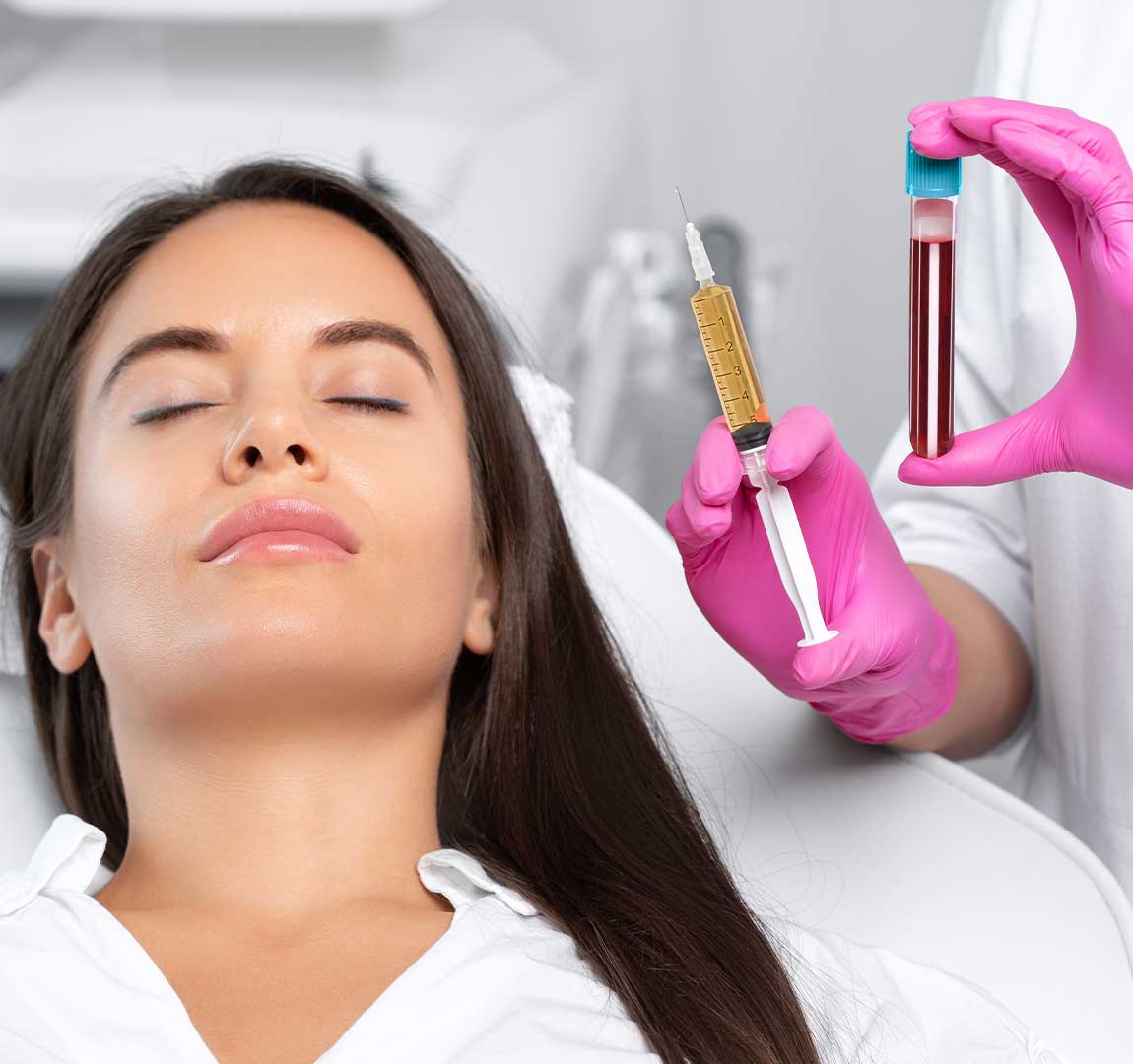
The treatment starts with a blood draw — usually from your arm. The sample is spun in a centrifuge to isolate your platelet-rich plasma.

This golden fluid is then injected into target areas using fine needles, or combined with microneedling.

You may experience light swelling, redness, or tightness for 24–48 hours.

Book Online

Step One

Your Consultation

We’ll review your skin or hair concerns and check whether PRP is suitable — and where it can offer best results.

Step Two

Your Treatment Plan

PRP is typically done as a course of 2–3 sessions. We’ll space them 4–6 weeks apart and track your progress.

Step Three

Your Aftercare

No makeup or strong skincare for 24 hours. Full results develop over time as collagen and healing factors take effect.

PRP (Platelet-Rich Plasma)

Treatment areas

  • Under-eyes
  • Full face
  • Neck
  • Acne scars
  • Pigmentation
  •  Scalp (for hair growth)

Your Questions Answered

FAQS

PRP has a strong safety profile, and a big part of that is because it uses your own blood, so there’s very little risk of an allergic reaction or rejection to the plasma itself. That said, it’s still an injectable treatment, so the usual risks apply: some bruising, swelling, tenderness, and, as with any injection, a small risk of infection, which is why sterile technique and proper handling matter. Very rarely, as with other facial injectables, there are more serious risks involving blood vessels, which is exactly why it should be carried out by a medically trained practitioner who understands the anatomy.

Neither is better, they simply do different jobs, and the right one depends on your concern. Filler adds volume and structure, so it’s the answer if you want to reshape, plump, or restore lost volume in a specific area. PRP doesn’t add volume at all, it works by stimulating your skin’s own healing and collagen, so it’s aimed at improving skin quality, texture, and radiance rather than changing shape. That’s why PRP is often chosen for delicate areas like under the eyes, or to support overall skin health, while filler is chosen for contour and volume.

Most people find it very manageable, though there are two small steps to be aware of. First is the blood draw from your arm, which feels like a standard blood test, and then the injections or microneedling into the skin. We use numbing cream to keep the treatment itself comfortable, and most clients describe a mild stinging or pressure rather than real pain. Some areas, like under the eyes or the scalp, can feel a little more sensitive. Dr Naz works gently and talks you through each stage as she goes.

Possibly, and it’s fairly common with PRP, particularly in delicate areas like under the eyes or on the scalp. Mild swelling, redness, or a feeling of tightness for the first day or two is normal, and any bruising usually settles within a few days. You can lower the risk by avoiding alcohol, strenuous exercise, and blood-thinning supplements for a day or two beforehand, where it’s safe for you to do so.

There are usually two phases to notice. Many people see a short-term freshness or glow within the first several days as the growth factors get to work, and then the more meaningful change- the collagen-building and skin-quality improvement- develops gradually over roughly four to eight weeks. Because it works with your body’s own healing rather than adding a product, the result builds rather than appearing instantly.

Yes, and it’s very often used alongside other treatments rather than on its own. It’s a natural partner to microneedling, where the PRP is applied so it absorbs through the freshly created channels, and it also pairs well with polynucleotides or skin boosters as part of a wider regenerative plan. For hair concerns, it can form part of a broader hair restoration approach. Dr Naz will map out what to combine and in what order so everything works together.

Most people can have PRP, but not everyone, which is why a proper assessment comes first. Because it relies on the quality of your own blood, it may not be suitable, or may be less effective, if you have certain blood or clotting conditions, a low platelet count, or particular medical conditions or medications. It’s also generally avoided in pregnancy and where there’s an active infection in the area. Dr Naz will go through your medical history at your consultation and be honest if PRP isn’t the right choice for you, or if another treatment would serve you better.

Improvements typically last somewhere in the region of 6 to 18 months, though this varies a good deal with your age, skin health, and lifestyle. Because PRP works by improving your skin’s own condition rather than adding a product that sits in place, the benefit builds through a course and then gradually eases as natural ageing continues. For that reason many people have a maintenance session periodically to keep their results going. How long yours holds depends partly on the concern being treated and how your skin responds. Dr Naz will suggest a realistic maintenance rhythm.

Client Reviews

Highly recommend!

“Dr Naz provides a very high standard of professionalism, advice and treatments. She has helped boost confidence within myself and always has an open and honest relationship with clients. Highly recommended and will continue to see Dr Naz in the near coming future.”

Read Google Reviews