Cryotherapy

Targeted Cold Treatment – Fast, Precise, Effective

Cryotherapy is a quick, non-invasive way to remove unwanted skin lesions — like warts, skin tags, and age spots — using a precision cryo pen. Minimal discomfort, no need for stitches or downtime.

Book Online
Dr Naz Clinics

What Is Cryotherapy?

Cryotherapy uses extreme cold to freeze and destroy unwanted skin lesions. At Dr Naz Clinics, we use a cryotherapy pen to accurately target only the lesion — preserving the surrounding skin. This makes it ideal for treating small imperfections like warts, skin tags, cherry angiomas, and seborrheic keratoses. The procedure is fast, safe, and suitable for most skin types.

Book online

Dr Naz Clinics

Small Area, Big Confidence Boost

It might be a raised tag, a red spot, or a rough patch — but once you notice it, it’s all you see. Cryotherapy gently clears these without surgery or scarring. We use the cryo pen to treat only what’s needed, leaving the rest of your skin untouched.

Quick, Clean, and Minimal Fuss

Most lesions take just a few seconds to treat. You might feel a cold sting, but it’s very manageable. In the days after, the lesion will darken and fall away as the skin regenerates underneath. No cuts. No bandages. Just simple, effective removal.

Procedure Time:

15–30 minutes

Results:

Removal of skin lesions or warts

Duration of Results:

Permanent (once treated)

Price:

From £100

Dr Naz Clinics

Why Clients Trust Dr Naz

Lesion removal can be sensitive — especially when it’s on the face or a visible area. Dr Naz brings clinical training, gentle technique, and a reassuring touch to every appointment. She’ll explain what it is, what to expect, and whether it’s suitable — with no pressure to proceed.

Find Out More

Dr Naz Clinics

Your Cryotherapy Journey

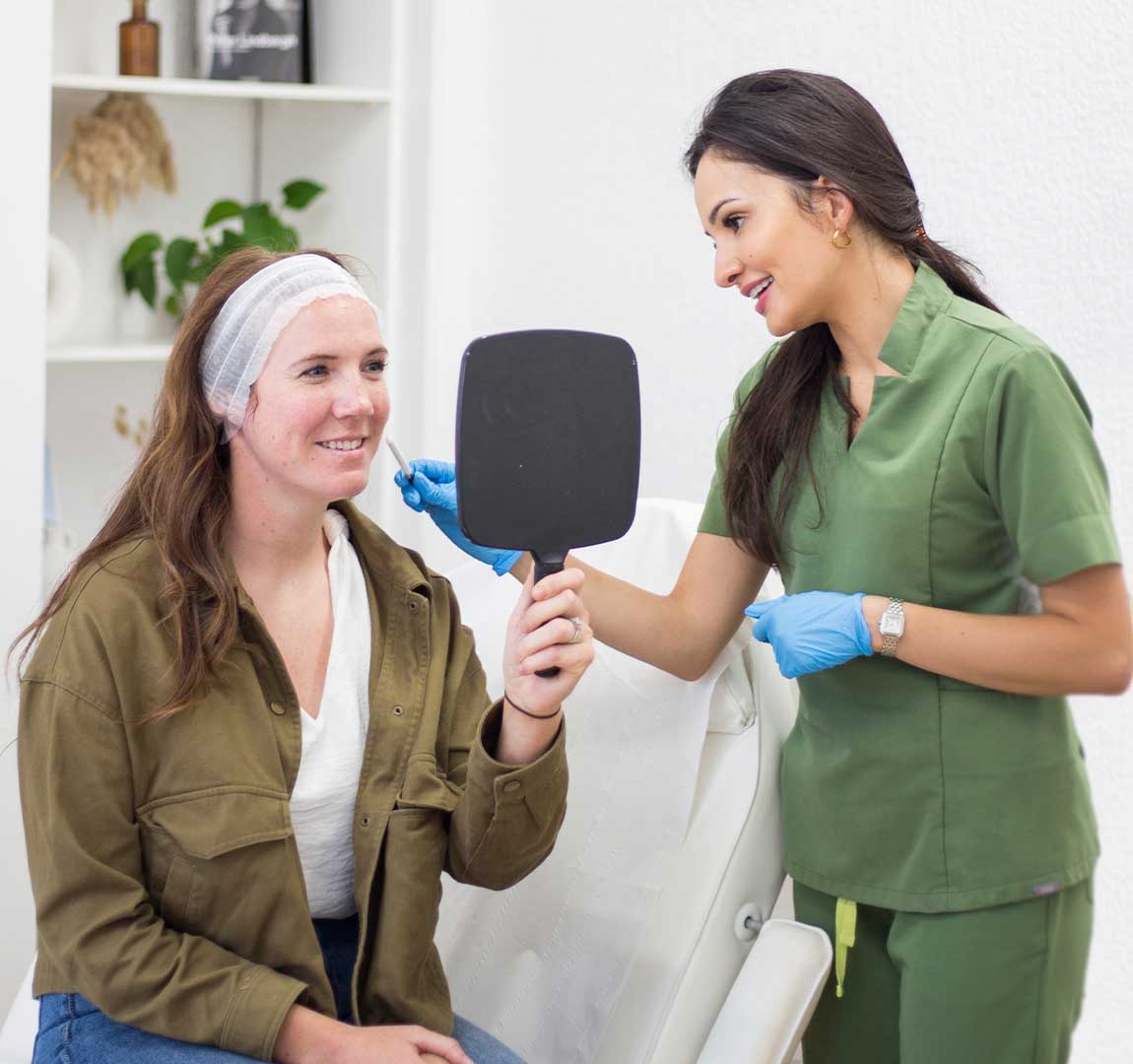
Every appointment begins with a skin assessment. If cryotherapy is right for you, the treatment can often be done immediately.

Book Online

Step One

Your Consultation

We’ll examine the lesion(s), explain what they are, and discuss whether cryotherapy is the best option. You’re free to ask questions and explore alternatives.

Step Two

Your Treatment Plan

Using the cryo pen, Dr Naz will freeze the target area for a few seconds. You may need more than one round depending on size and thickness.

Step Three

Your Aftercare

The lesion will dry, darken, and fall away naturally within days. We’ll explain how to care for the area — and what signs to expect as it heals.

Cryotherapy

Where We Use Cryotherapy

  • Face
  • Neck
  • Hands
  • Chest
  • Anywhere with small, visible lesions

Your Questions Answered

FAQS

Cryotherapy is used to remove common, benign skin lesions, things like skin tags, viral warts and verrucas, seborrhoeic keratoses, cherry angiomas, and some sun or age spots. It works by freezing the lesion so it dies off and drops away, and it’s well suited to small, surface-level, harmless growths. What it is not is a way to remove a lesion without first knowing what it is. Because freezing destroys the tissue rather than removing it for testing, Dr Naz always assesses a lesion before treating, and anything that looks suspicious, is changing, or is an actual mole she won’t freeze, because those need proper evaluation instead.

Not much. Most people describe it as a sharp, cold sting for the few seconds the freeze is applied, followed by a little tingling or throbbing that quickly settles. Numbing usually isn’t needed because each application is so brief. Some spots, or thicker lesions that need a longer freeze or a repeat, can feel a bit more intense.

Usually not a significant one, because the cryo pen lets Dr Naz target just the lesion and largely spare the surrounding skin. That said, any lesion removal carries some risk, and with freezing the main thing to be aware of is a change in skin pigment, either a lightening or occasionally a darkening of the treated spot, which is more likely on deeper skin tones and can sometimes be long-lasting.

It’s best to leave the treated area bare for a couple of days while it begins to heal, particularly on the face. Once a small scab has formed and the area is settling, you can usually cover it gently if you need to, and we’ll advise on timing for your specific treatment. The more important thing is not to pick or scratch the scab, since letting it come away naturally gives the best result and lowers the risk of marking.

Cryotherapy suits most skin types, but it needs extra care on deeper skin tones, and this is something Dr Naz assesses carefully. Because freezing affects the pigment-producing cells in the skin, there’s a risk of a lighter or darker patch where the lesion was, and that risk is higher, and can be more lasting, on darker skin. That doesn’t rule it out, but it does mean the technique and freeze time are tailored, and sometimes an alternative is more appropriate. She’ll be honest at your assessment about the likely outcome for your skin and whether cryotherapy or another option is the better choice.

Most treated lesions darken, dry, and fall away on their own within about five to ten days, though the exact timeline depends on size, thickness, and location. You’ll usually see a small scab form first, which then detaches naturally, and the fresh skin underneath settles over the following couple of weeks. Larger or thicker lesions can take a little longer or need a second treatment. It’s important to let the area heal without picking at it and to keep it protected from the sun.

Yes, and it’s very common to treat several small lesions in a single appointment, since each one only takes a few seconds to freeze. Dr Naz will assess each lesion individually first, because they each need to be confirmed as benign and suitable before any are treated, rather than assuming they’re all the same. If any one of them looks like it needs proper evaluation rather than freezing, she’ll flag that separately and not treat it.

If a benign lesion is fully treated, it usually doesn’t come back, so in that sense the result is permanent for that particular spot. Some lesions, especially thicker ones or warts, can be stubborn and need a repeat treatment to clear completely, which is normal. It’s worth knowing, though, that cryotherapy doesn’t stop new lesions forming elsewhere over time, since things like skin tags and sun spots often relate to friction, genetics, or sun exposure.

Client Reviews

Completely at ease!

“If you book with Dr Naz you are in very safe hands! New to some treatments and Dr Naz explained everything clearly, provides support throughout your treatment and afterwards. I feel completely at ease and highly recommend Dr Naz to anyone considering any beauty treatments. Reach out to her and you will not be disappointed!”

Read Google Reviews