Introduction
Microneedling has become one of the most talked-about skin treatments in the UK and for good reason. It’s clinically backed, suitable for a wide range of skin types and concerns, and delivers results that go well beyond what topical skincare alone can achieve. But with so much information (and misinformation) online, it can be hard to know what to believe. This guide cuts through the noise.
Whether the concern is acne scarring, uneven texture, fine lines, enlarged pores, or general skin dullness, this blog explains exactly how microneedling works, what results are realistic, who it is and isn’t suitable for, and what a professional treatment at a Liverpool clinic looks like in 2026.
As a medically led aesthetics clinic in Liverpool, Doctor Naz Clinic offers microneedling as part of a carefully considered skin treatment programme. Every patient begins with a thorough consultation to establish whether microneedling or a different approach entirely is the right fit.
What Is Microneedling?
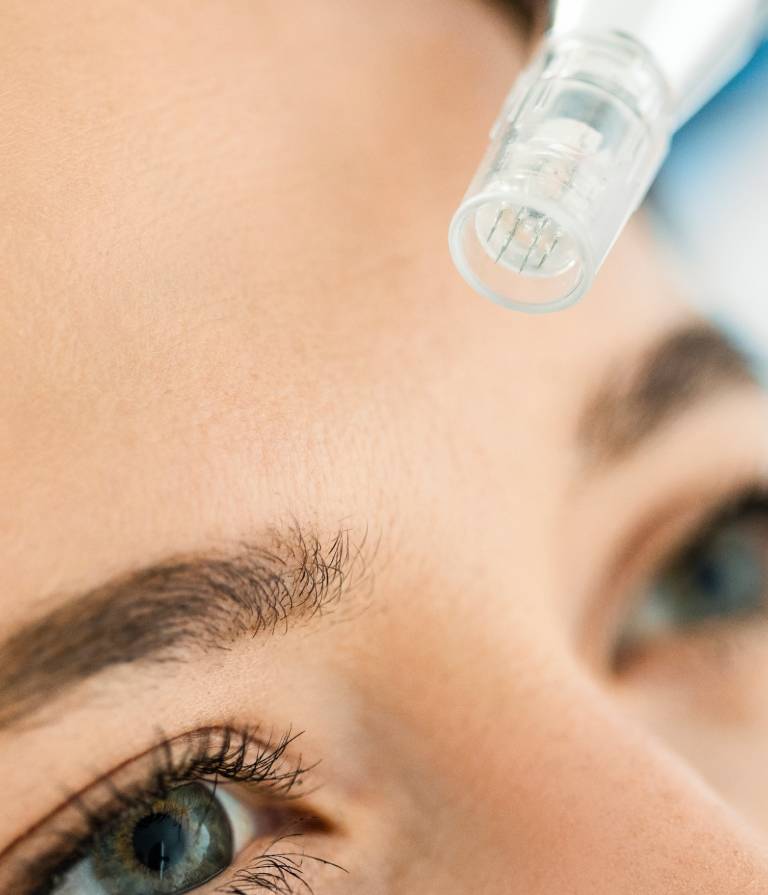
Microneedling, also known as collagen induction therapy (CIT) or percutaneous collagen induction (PCI), is a minimally invasive skin treatment that uses a device fitted with very fine, sterile needles to create thousands of microscopic channels in the upper layers of the skin.
These controlled micro-injuries trigger the body’s natural wound-healing response. The skin responds by producing new collagen and elastin, the structural proteins responsible for firmness, elasticity, and a smooth surface texture. The epidermis (the outermost layer) remains largely intact, which is why microneedling carries a lower risk of adverse effects compared to more ablative treatments such as laser resurfacing.
What Can Microneedling Treat?
One of microneedling’s greatest strengths is its versatility. It can address a broad range of skin concerns, making it a valuable treatment for patients who may not be candidates for more targeted procedures.
The most well-supported clinical applications include:
- Acne scarring — particularly atrophic (pitted or indented) scars. This is one of the most extensively studied uses, with multiple randomised controlled trials demonstrating consistent improvement
- Fine lines and early wrinkles — the collagen stimulation effect gradually plumps and firms the skin, reducing surface lines
- Enlarged pores — over time, the thickening of the dermis gives the appearance of smaller, tighter pores
- Uneven skin texture — rough, bumpy, or dull skin responds well to the resurfacing effect
- Hyperpigmentation and sun damage — microneedling can help disperse pigment deposits and encourage cellular turnover
- Stretch marks — particularly effective when treated early; results improve further when combined with PRP
- Skin laxity — the new collagen produced provides a subtle tightening and firming effect over a course of treatments
It is worth noting that microneedling is not a quick fix; results build progressively over several weeks as the skin remodels. A course of treatments is typically recommended for optimal outcomes rather than a single session.
Professional Microneedling vs At-Home Derma Rollers: Why It Matters
At-home derma rollers are widely available and heavily marketed, but they are not the same as a professional microneedling treatment. The key difference lies in needle depth and precision.
At-home rollers typically reach only 0.25mm, not deep enough to trigger meaningful collagen production. Professional medical-grade devices used in clinics can penetrate up to 2.5mm, which is the depth required to stimulate the dermis and produce clinically significant results.
Beyond depth, there are other critical differences:
- Sterility: professional single-use needle cartridges eliminate the infection risk associated with reused home rollers
- Precision: a trained practitioner adjusts needle depth depending on the area being treated, deeper for scarring, shallower for general rejuvenation
- Aftercare: professional treatments include full aftercare guidance, with the option to combine serums or PRP at the point of treatment to enhance results
- Safety: a medical consultation identifies any contraindications before treatment, something no at-home device provides
At Doctor Naz Clinic, microneedling is carried out using a medical-grade automated device. Needle depth and pressure are customised to each patient’s skin type, concerns, and treatment goals.
What to Expect: A Step-by-Step Treatment Guide
For anyone considering microneedling at Doctor Naz Clinic in Liverpool, here is what a typical treatment journey looks like:
- Consultation — A full skin assessment is carried out before any treatment is booked. Dr Naz will review skin type, medical history, current skincare, and goals. A personalised plan including the number of sessions recommended will be outlined.
- Pre-treatment preparation — Patients may be advised to pause certain active skincare ingredients (such as retinoids or acids) for a period before treatment. Sun protection is essential in the weeks leading up to and following each session.
- Numbing — A topical numbing cream is applied 30–45 minutes before the procedure to minimise discomfort. Most patients rate the sensation as a 2–3 out of 10 with numbing in place.
- Treatment — The microneedling device is passed systematically across the treatment area. Session time is typically 45–60 minutes, depending on the area covered.
- Immediate aftercare — The skin will appear red and feel warm, similar to a mild sunburn. This typically settles within 24–48 hours. A gentle skincare routine and strict sun protection are essential in the days that follow.
- Results timeline — Improvement in texture and tone is often noticeable within 2–4 weeks of the first session. Collagen remodelling continues for up to 3 months post-treatment, with cumulative improvement across a course.
- Follow-up sessions — Most concerns benefit from a course of 3–6 treatments, spaced 4–6 weeks apart. A maintenance session every few months helps to sustain and build on results.
Microneedling Combined with PRP: Enhanced Results
For patients looking to maximise results, particularly for acne scarring or hair restoration, microneedling can be combined with Platelet-Rich Plasma (PRP). PRP is derived from the patient’s own blood: a small sample is taken, spun in a centrifuge to concentrate the growth factors, and the resulting plasma is applied to the skin immediately after microneedling or injected directly.
The micro-channels created by the needles allow the PRP to penetrate deeply into the skin, amplifying the regenerative response. Clinical literature indicates that the combination consistently produces more significant improvements in acne scarring than microneedling alone.
Doctor Naz Clinic offers both standalone microneedling and combined microneedling with PRP, depending on the patient’s skin concerns and treatment goals.
Who Is Microneedling Not Suitable For?
Microneedling is not appropriate for everyone. A responsible practitioner will identify contraindications during consultation.
Treatment is generally not recommended for patients who:
- Have active acne, open wounds, or skin infections in the treatment area
- Are you currently pregnant or breastfeeding
- Have a history of keloid scarring or poor wound healing
- Are taking blood-thinning medications (discuss with the practitioner, not always an absolute contraindication)
- Have had recent radiation therapy to the area
- Have used isotretinoin (Roaccutane) within the last 6–12 months
This list is not exhaustive. A full medical consultation will always be carried out before any treatment at Doctor Naz Clinic. If microneedling is not suitable, alternative options will be discussed.
Frequently Asked Questions
How many microneedling sessions will I need?
This depends on the concern being treated. For general skin rejuvenation and texture, a course of 3 sessions is often sufficient. For deeper acne scarring or more significant concerns, 4–6 sessions are typically recommended, with sessions spaced 4–6 weeks apart. A personalised plan will be discussed during the consultation.
Does microneedling hurt?
With numbing cream applied beforehand, most patients find the treatment very tolerable, typically rating discomfort at around 2–3 out of 10. Some areas (such as the forehead or around the nose) may feel more sensitive than others.
How long does it take to see results from microneedling?
Initial improvements in skin texture and radiance are often noticeable within 2–4 weeks of the first session. Deeper results, such as improvement in scarring or fine lines, develop over 2–3 months as new collagen matures. Results continue to improve across a course of treatments.
Can microneedling be used on darker skin tones?
Yes — microneedling is considered one of the safest skin rejuvenation options for darker skin tones (Fitzpatrick types IV–VI). Unlike laser treatments, it generates no heat, which significantly reduces the risk of post-inflammatory hyperpigmentation. It is, however, important to discuss skin tone with the practitioner before proceeding.
What is the difference between microneedling and radiofrequency microneedling?
Standard microneedling uses needles alone to create micro-channels and stimulate collagen. Radiofrequency (RF) microneedling adds thermal energy through the needles into the dermis, which enhances collagen contraction and provides a stronger tightening effect. RF microneedling is particularly suited to skin laxity and more advanced skin ageing. It requires additional training and is a more intensive treatment. Doctor Naz Clinic offers the most appropriate option, which will be recommended during consultation.
Can I wear makeup after microneedling?
It is recommended to avoid makeup for at least 24 hours after treatment while the micro-channels close. After this period, a mineral-based SPF product can be applied gently. Full makeup can typically be resumed after 48–72 hours, depending on skin response.
Benefits of Microneedling at Doctor Naz Clinic, Liverpool
Choosing a medically led clinic for microneedling means more than just the treatment itself.
Here is what patients at Doctor Naz Clinic can expect:
- Full medical consultation: skin type, concerns, and contraindications are assessed before any treatment is planned
- Medical-grade equipment: professional automated devices with single-use, sterile needle cartridges, not beauty salon equipment
- Customised needle depth: treatment parameters are adjusted per patient and per area for safe, targeted results
- Combination options: microneedling can be combined with PRP, skin boosters, or other treatments as part of a wider skin programme
- Honest expectations: Dr Naz will explain clearly what is realistic from microneedling and how many sessions are genuinely needed without overselling
- Liverpool clinic: conveniently located, with a calm and professional environment
Ready to Find Out If Microneedling Is Right for You?
Microneedling is a well-evidenced, versatile skin treatment, but it is not right for every concern, every skin type, or every patient. The best starting point is always an honest consultation with a qualified practitioner who can assess the skin properly and recommend an approach that will genuinely make a difference.
At Doctor Naz Clinic in Liverpool, microneedling consultations are thorough, personalised, and completely without pressure. Dr Naz will assess the skin, explain the options clearly, and only recommend treatment if it’s the right fit.
Get in touch today to book a consultation or to ask any questions before taking the next step.
Phone: 07361 599 203
Email: info@doctor-naz.com
Website: www.doctor-naz.com